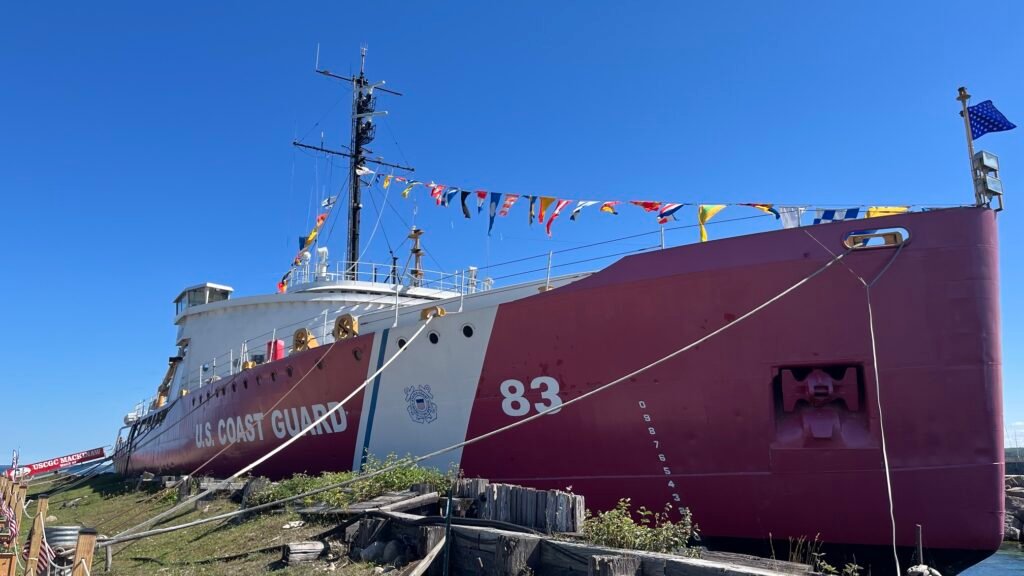
In 1988, the Coast Guard Icebreaker Mackinaw was being considered for decommissioning. It had served as the largest icebreaker on the Great Lakes for over forty years then. Reporter Stephen Ward, and me as recording engineer spent about a day and a half on board in the cold of January documenting the sounds and voices on board the Mackinaw.
We got on board on a frigid day, were assigned our bunks, told to wear these insulated thermal floatation suits called Mustangs whenever we were on the weather decks, and also told where we could not go due to safety or security concerns. Beyond that, we had the run of the ship and could record anyone and anywhere we wanted.
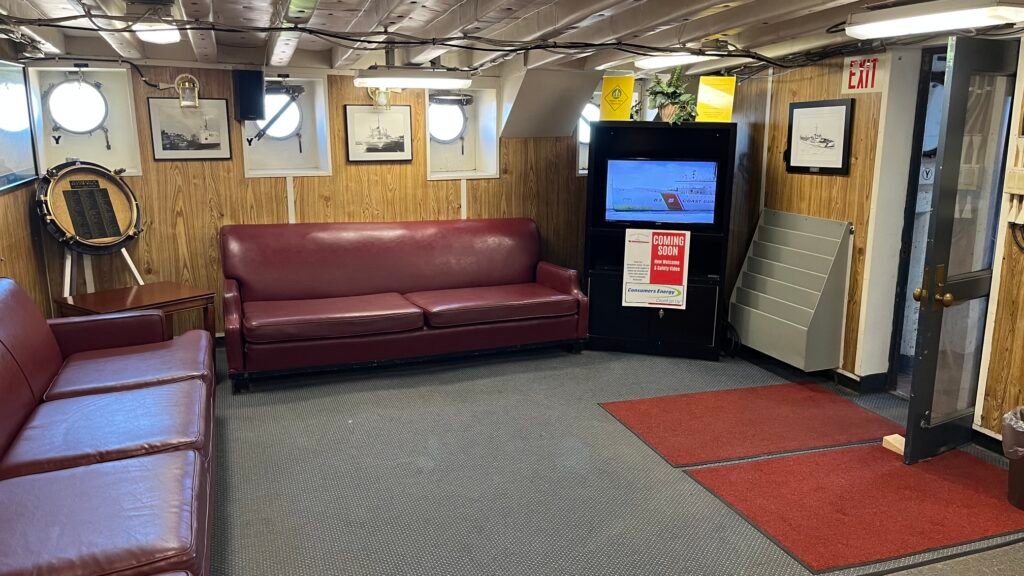
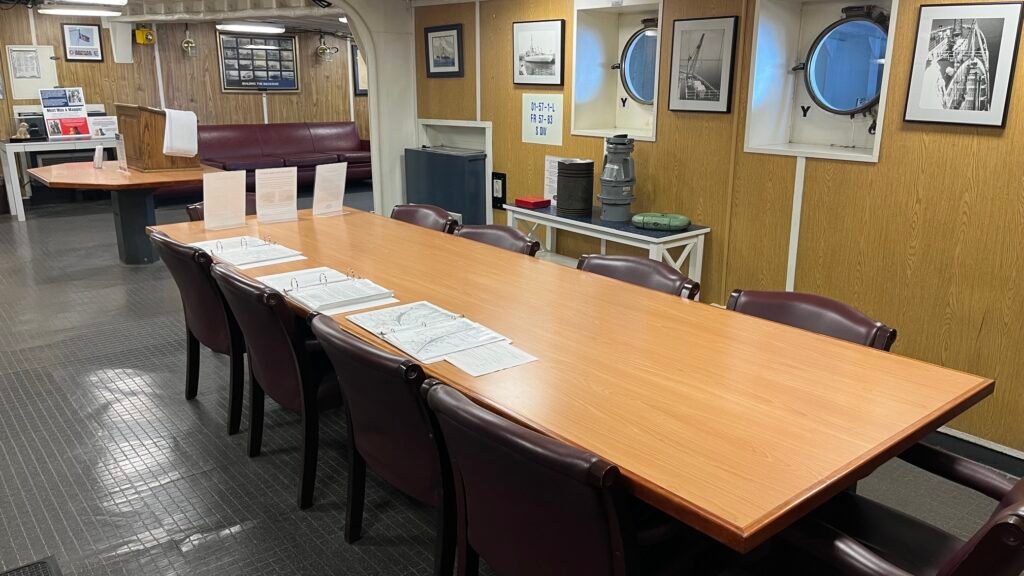
As VIP’s, we took our meals in the wardroom mess after getting our food cafeteria style with the crew.
We were in officer country, and the berths were spacious in comparison to the crew who slept 10 or 12 to a corridor-like room.
We left Cheboygan and headed out to the lake staying near the lower peninsula to avoid breaking ice near the ice road from St. Ignace to Mackinaw Island.
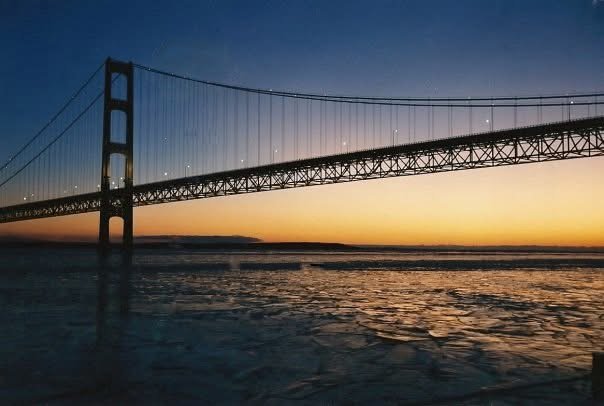
We went under the Mighty Mac, and headed towards the Lansing Shoal light some 35 miles west of the Straits. The mission was to do sea trials of the new winch controller that had been installed after the ice breaking season ended when the Soo Locks are closed. To test the winch, the Mackinaw was to attach its 2 inch steel towing cable to another Coast Guard cutter that was to be towed stern to stern to put a load on the winch.
Icebreaking is essential on the Great Lakes, especially in the approach to the Soo, from Lake Superior or Huron. The freighters can usually manage okay until they need to turn, and there’s nothing but turns from De Tour to the Soo. And that’s where the Mackinaw shined.
The sound of ice breaking against the hull, especially on lower decks, was almost deafening.
After we arrived that night where the sea trails were going to take place, the Mackinaw plowed into ice miles from shore and came to a stop. ‘Underway, not making way’ was recorded into the ship’s log. The radarman took out a grease pencil and drew the outline of the shoreline and other features onto the glass of the radar scope as a way of show if we were to drift.
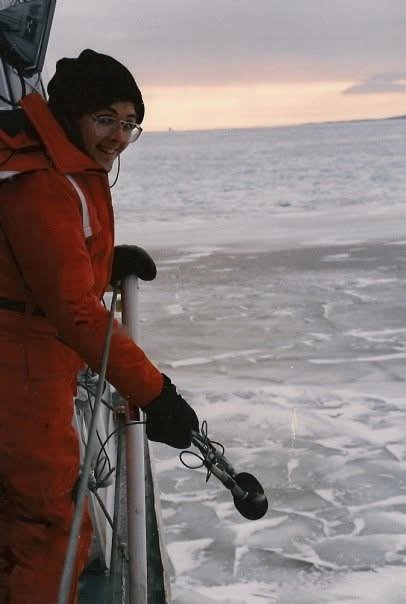
In the middle of the night, I woke up and took my recording equipment up to the bridge to interview those that stood watch overnight. The bridge was dimly lit with red lights. I went out onto the wings out from the bridge to talk with a sailor who spent his early morning hours with binoculars looking out at the stillness of the night. It was below zero Fahrenheit.
In the morning, there was fresh coffee and strawberry pancakes for breakfast.
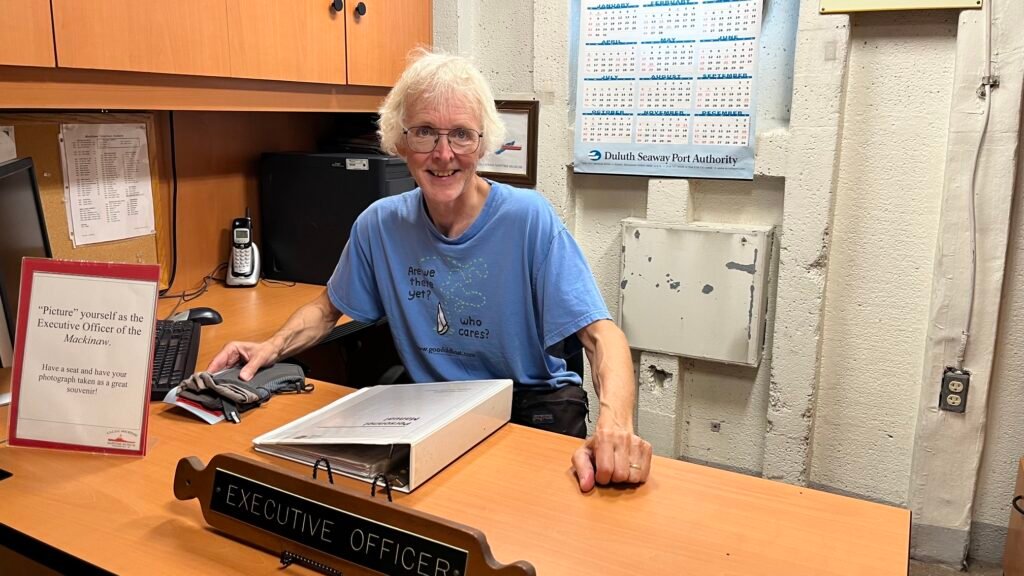
Walking around the Mackinaw, now a museum ship, I was surprised. Surprised at how familiar the spaces were even all these years later. The wardroom where we spent time when not recording. The XO’s (Executive Officer) office where we got our instructions. The ladder down to one of the three engine rooms, where it was loud, hot and smelling of diesel fuel and lube oil back when we were aboard. The ladders up to the bridge, and down from the weather deck.
The documentary, made from the cassette recordings that Stephen and I made, dubbed onto reel-to-reel tape all played back from a cassette deck and three machines mixed down to a stereo recording won first place in a radio documentary competition. It aired on WKAR, and other public radio stations around Michigan.
The Mackinaw wasn’t decommissioned that year, or the next. It continued to break ice for the big freighters for almost another twenty years, until finally in 2006. A new icebreaker bears the name Mackinaw, still harbored in Cheboygan. The old Mackinaw lies in Mackinaw City, and is open every day in the summer for tours.